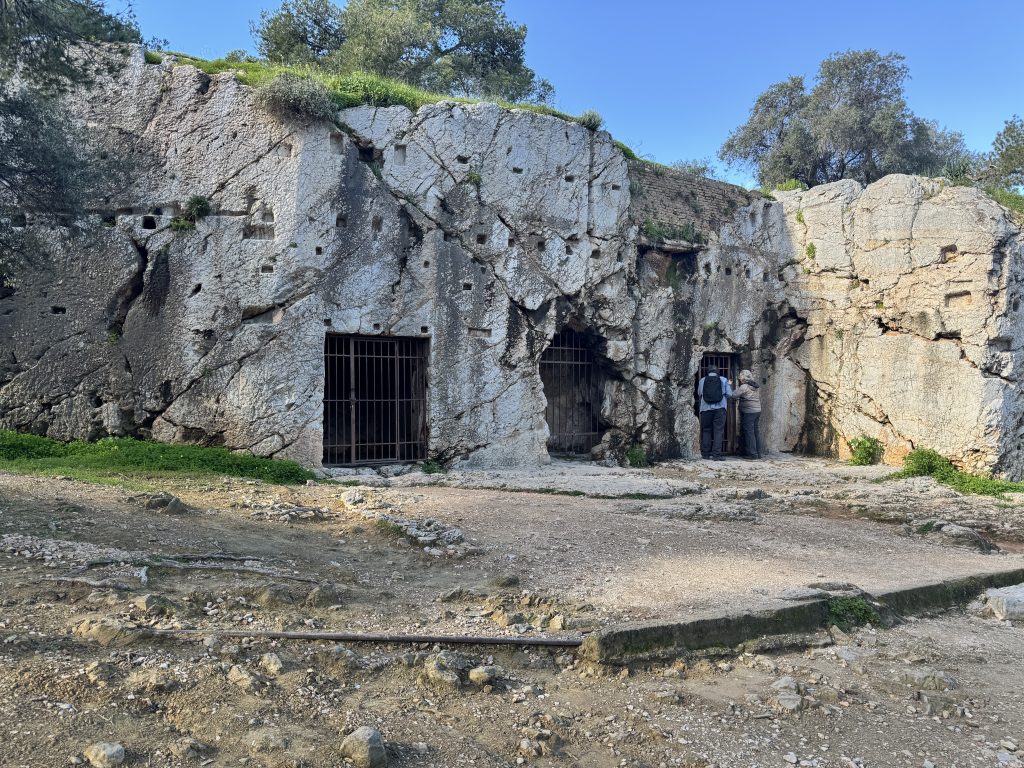
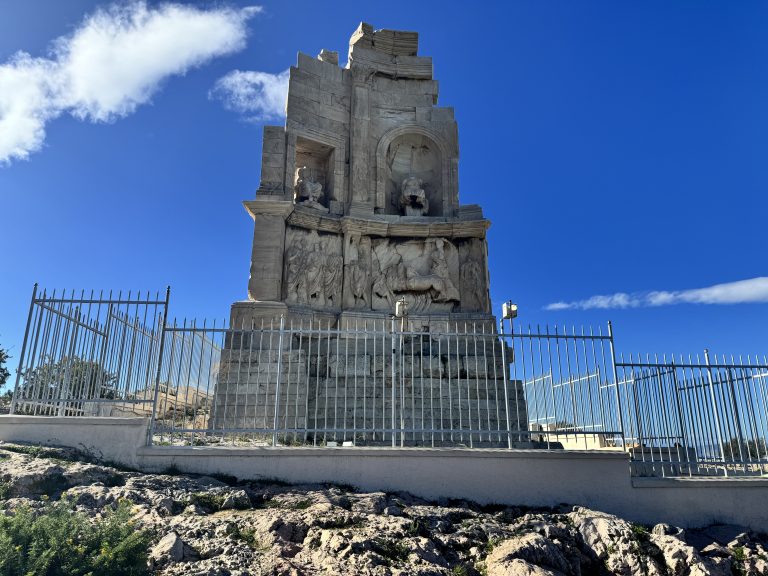
The so-called “Socrates’ Prison” is a cave-like site on the slopes of Philopappos Hill in Athens. Tradition holds that this is where the philosopher Socrates was held before his execution in 399 BC. The site consists of rock-cut chambers carved into the hillside.
It’s not definitively proven to be Socrates’ exact cell, but it has long been associated with his imprisonment.
Archaeologists suggest it may have been used as a storage facility or military prison in ancient times.
Socrates was tried in Athens on charges of Impiety (not honoring the gods of the city)
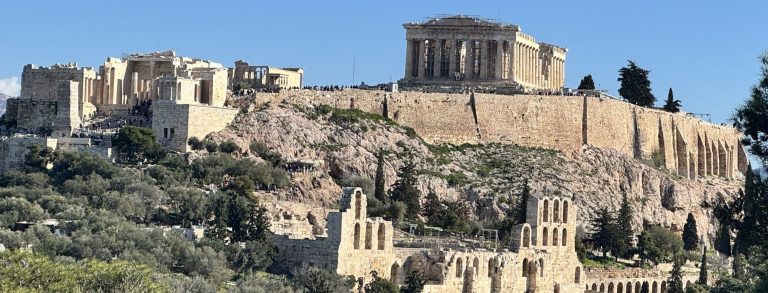
Corrupting the youth. He was found guilty and sentenced to death. According to Plato (his student), Socrates spent his final days in prison discussing philosophy with friends before drinking a cup of hemlock poison. Even though its identification isn’t certain, the cave is important because It connects visitors to one of the most famous moments in Western philosophy. It symbolizes intellectual integrity and resistance to unjust authority.It sits near other key classical sites like the Acropolis
If you want, I can walk you through what happened during Socrates’ last days in prison or explain the philosophical ideas he discussed there.
AuthorPK Travel
Share to
More Articles
1 May 2026
Acropolis of Athens
The Acropolis of Athens and its monuments are universal symbols of the classical civilizationsituated on a rocky hill above the city. Its most famous structure is the Parthenon, built in […]
The famous Odeon of Herodes Atticus dominates the western end of the South Slope of the Acropolis. It was built during the 2nd century AD, with money donated by Tiberius […]
Areopagus is a rocky hill in Athens: In classical times, the Areopagus was the meeting place of Athens’ most prestigious council of elders. They handled serious legal cases—especially homicide—and were […]
Philopappos Hill (often called Filopappou) is one of the loveliest viewpoints in Athens—a pine-covered hill right across from the Acropolis of Athens. Best sunset spot in the city, with wide views […]
You mean the Panathenaic Stadium (often called Kallimarmaro, “beautiful marble”). Built on the site of a 4th-century BC stadium and fully rebuilt in marble for the first modern Olympics in 1896. […]
Lycabettus Hill: Lycabettus Hill (Λυκαβηττός) is the highest point in central Athens, rising about 277 meters above sea level. It’s one of the best places to get panoramic views of […]
The Ancient Agora of Athens was the civic and commercial heart of ancient Athens—part marketplace, part political hub, part social hangout. If the Acropolis was the spiritual skyline, the Agora was […]