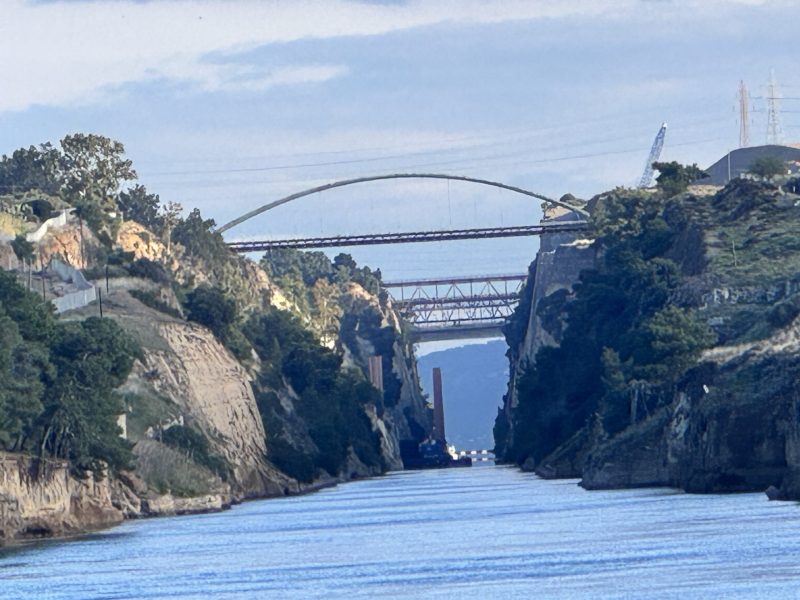
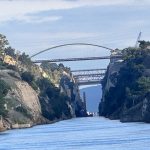
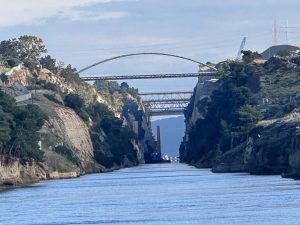
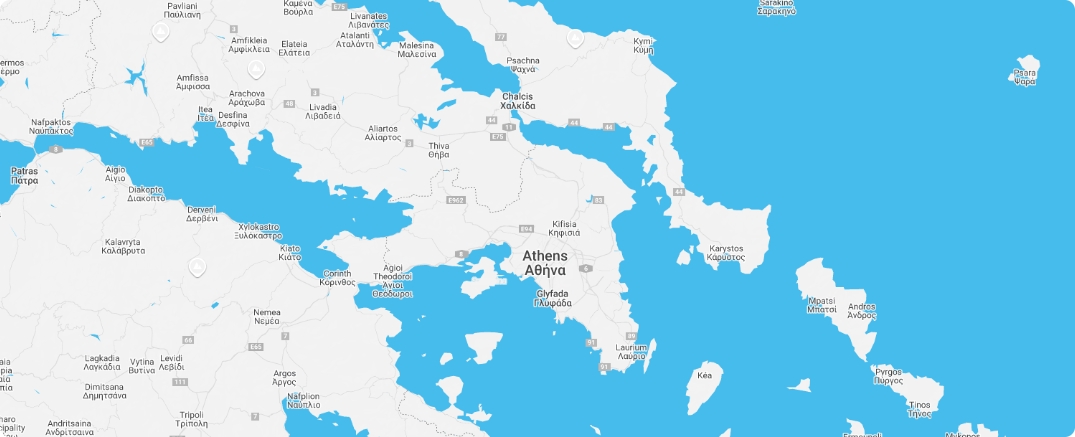
Corinth Canal: The canal was dug through at sea level and has no locks. Was started in 1882 and completed in 1893 It is 6.4 kilometres in length and at 24.6 metres wide at sea level and connects the Aegean Sea with the Ionian Sea.
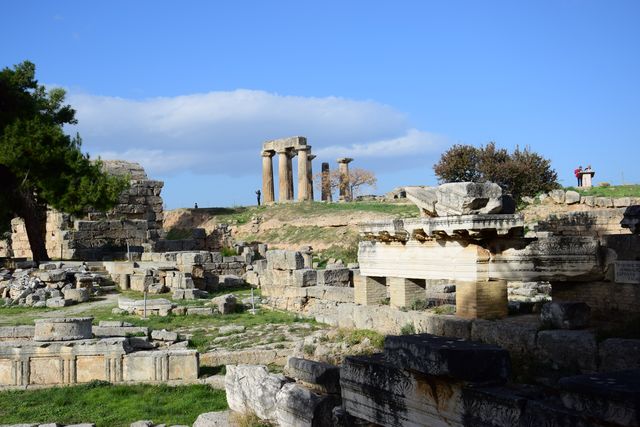
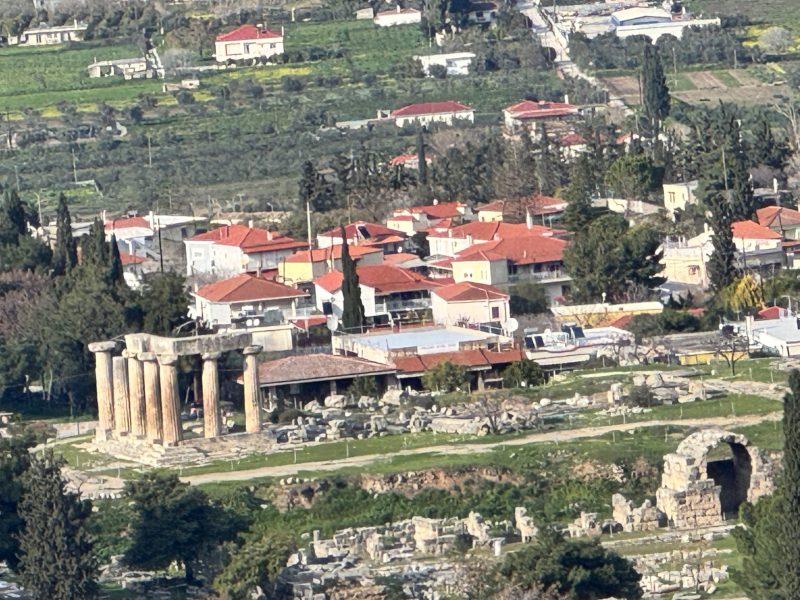
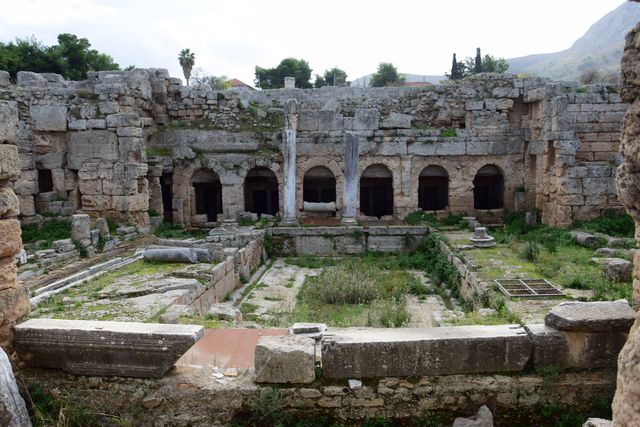
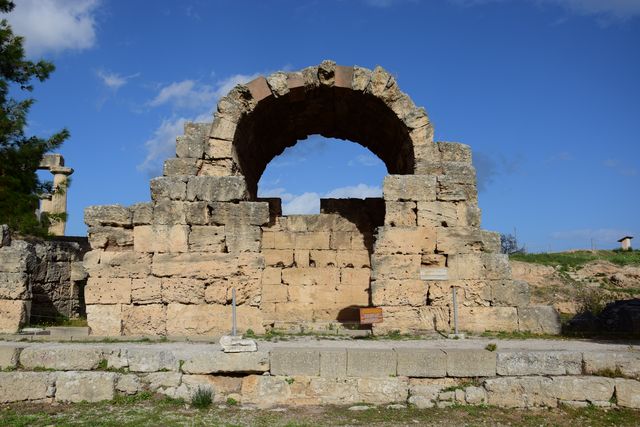
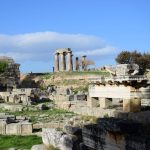
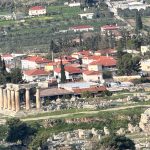
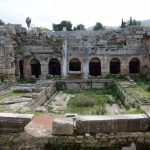
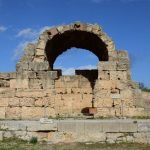
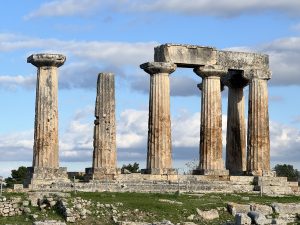
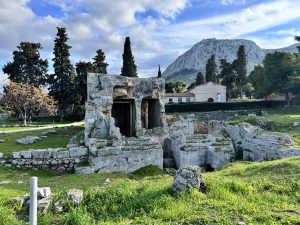
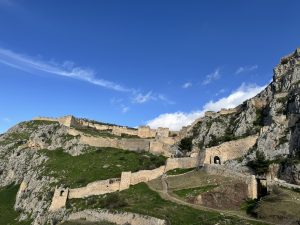
Ancient Corinth: Peirene Fountain, Temple of Appollo [6th c. BC with 1st c. AD restorations], Bema of St Paul, Roman Forum, Odeon, Amphitheater, Glauke Fountain, Long Walls that begin at the summit of Acro-Corinth and descend all the way to Lechaion.
Bema: a large elevated rostrum standing prominently in the center of the Roman Forum of ancient Corinth and from where the city’s officials addressed the public. Probably because of the monument’s connection to Saint Paul, the Bema was transformed into a Christian church during the Byzantine period. The Bible, in the Book of Acts, records that Paul was brought for judgment before the proconsul Gallio on the accusation of conducting illegal teachings. Gallio, however, refused to judge what he considered to be a mere religious dispute among the Jews.
Kenchreai: according to Acts 18:18, the Apostle Paul stopped at Kenchreai during his second missionary journey, where he had his hair cut to fulfill a vow, probably a Nazirite vow. Apostle Paul mentions the place and a deacon named Phoebe in the local assembly in his epistle to the Romans (Romans 16:1). Archaeological evidence indicates that trade with other Mediterranean regions continued into the 7th Century AD. A later ecclesiastical tradition recorded the existence of a bishop at Kenchreai, but the veracity of these accounts is hard to establish).